

Research and Reports
Our latest research, data releases, and analysis on college value, earnings, and economic mobility.
As the cost of college rises and confidence in its economic value declines, students and families increasingly need clear information about what different degrees and credentials deliver. This report analyzes federal earnings data for 276,963 graduates across 2,958 programs, 225 fields of study, and 386 California institutions to show how outcomes vary by field and credential level.
Public Agenda and The HEA Group announced a two-year collaborative initiative to improve data transparency and economic mobility across California’s higher education landscape.
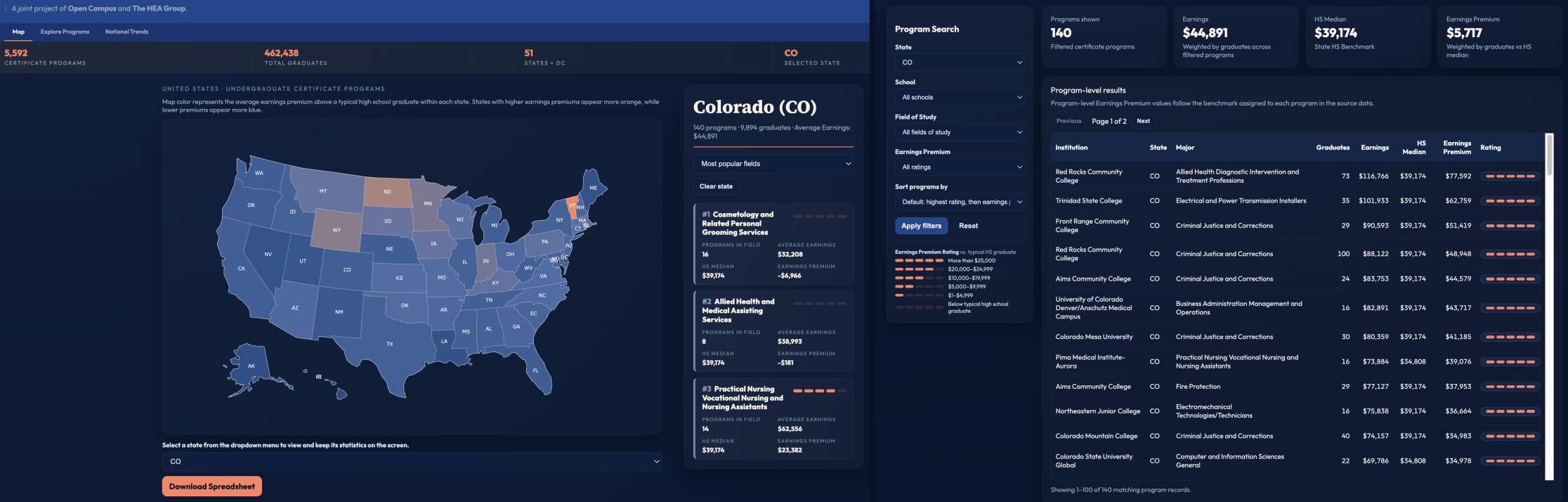
Are certificates worth it? For which programs? Do they align with Colorado's future economy? With a new short-term Pell Grant program launching on July 1, 2026, The HEA Group President Michael Itzkowitz argues that Colorado policymakers have a real opportunity to boost the state’s economic prosperity if they can answer those questions.
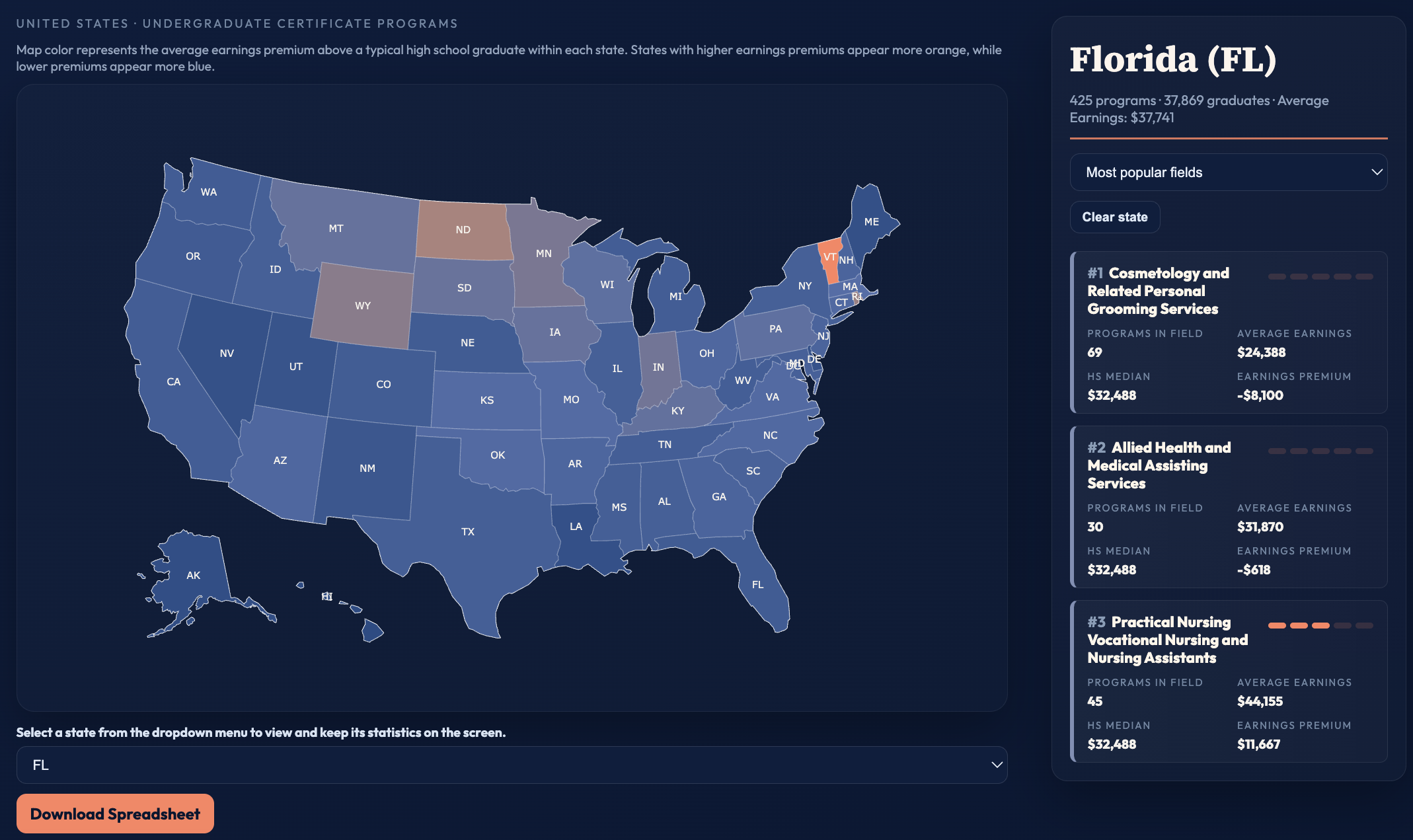
The Certificate Earnings Explorer includes actual earnings outcomes for 5,592 certificate programs, representing more than 462,000 graduates across all 50 states and the District of Columbia.
The HEA Group’s three-year anniversary reflects its significant role in shifting higher education toward the use of earnings and ROI data to evaluate institutional and program effectiveness, influencing federal policy, accreditation, and student decision-making. Our research has helped drive new accountability measures, transparency tools, and policy reforms at both the state and national levels. Looking ahead, we aim to expand its impact by continuing to promote outcomes-based evaluation and ensuring that higher education delivers greater economic mobility for students.
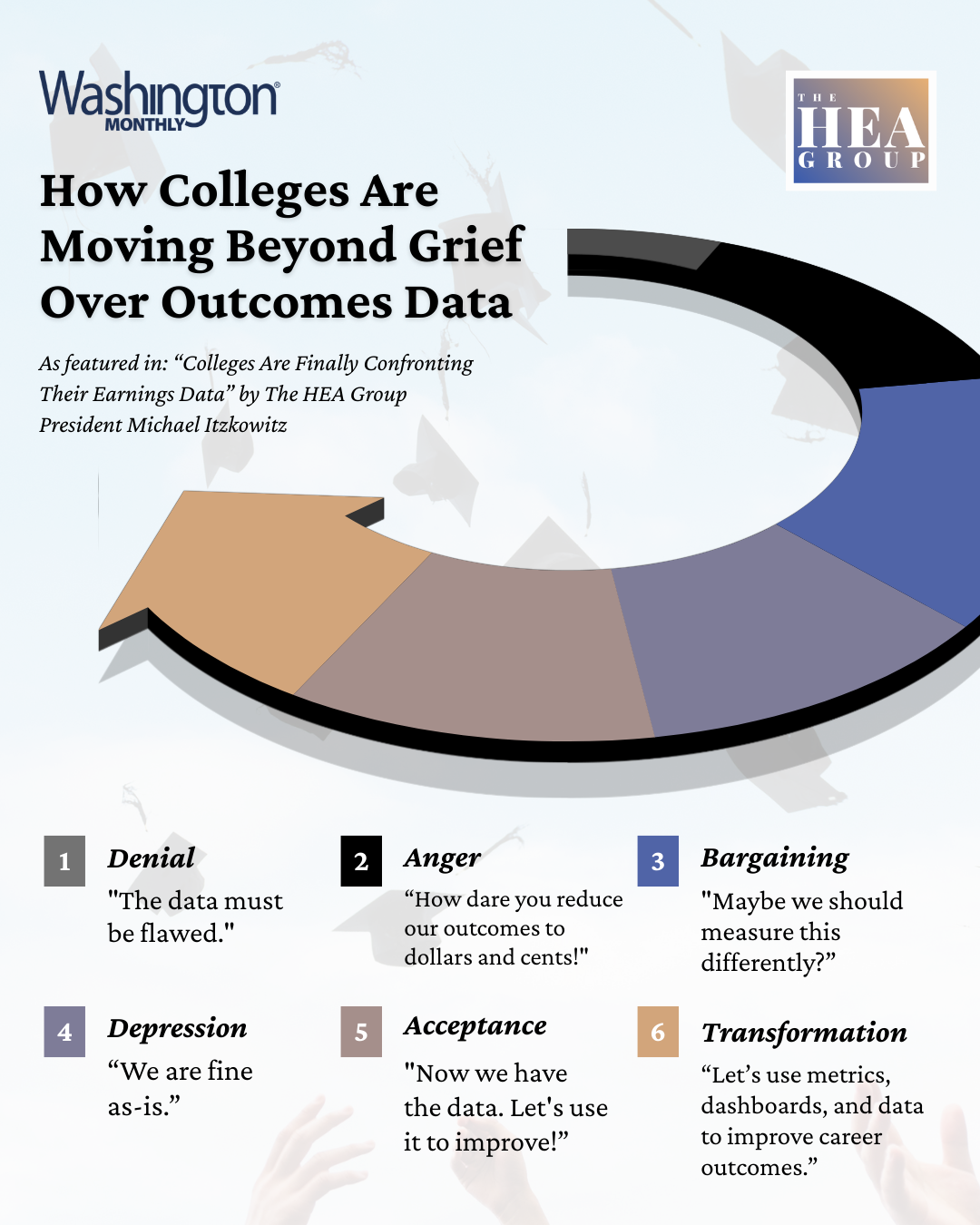
HEA Group President Michael Itzkowitz argues that higher education institutions have moved through stages resembling the five stages of grief (denial, anger, bargaining, depression, and acceptance) as they confront increasingly transparent data on graduates’ earnings and economic mobility. Itzkowitz contends that once institutions reach acceptance, they can use outcomes data constructively to redesign programs, improve advising, and better align education with labor-market opportunities for students.
At a time when students and families are questioning the value of college and higher education leaders face difficult decisions about improving outcomes and economic mobility, Michael Itzkowitz of the HEA Group hosted a timely conversation with Former U.S. Secretary of Education and current SUNY Chancellor John King.
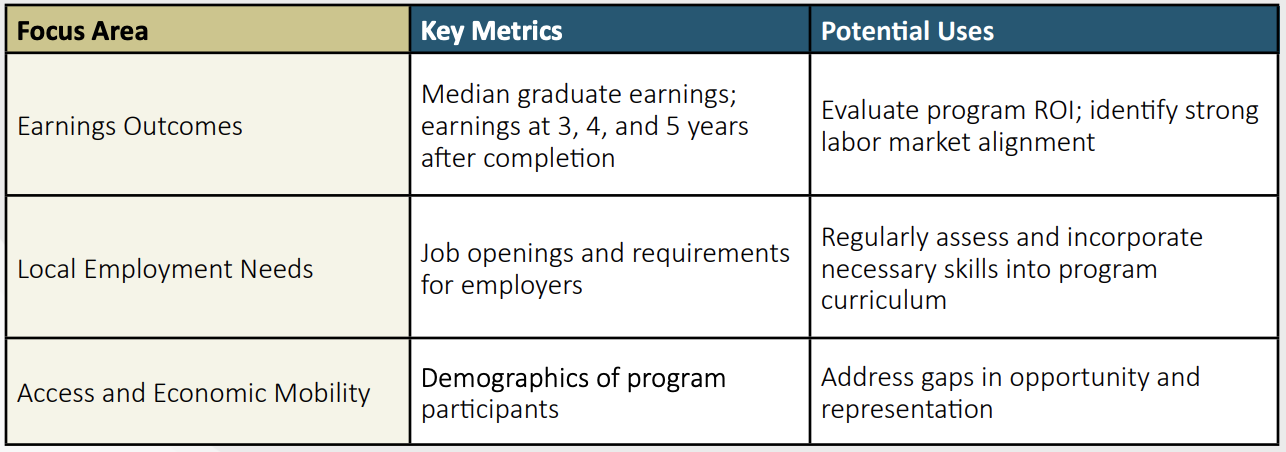
The HEA Group is proud to have worked with the Accrediting Commission for Community and Junior Colleges' (ACCJC's) on its new framework highlighting how program specific outcomes offer a more precise and actionable understanding of how individual fields of study contribute to students’ long-term economic mobility.
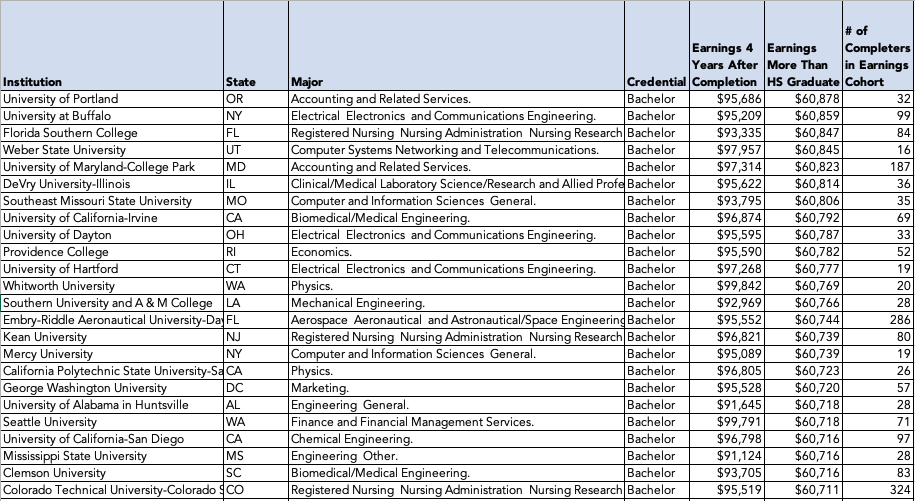
The HEA Group has analyzed all 32,578 undergraduate programs in the Education Department’s new data determining which college programs may remain eligible for federal student loan participation.
Harlan Cohen sat down with Michael Itzkowitz, director behind the College Scorecard and founder & president of The HEA Group.
In this episode of Equity Chat 2.0, Dr. Keith Curry sits down with Michael Itzkowitz, a nationally recognized higher education policy expert with more than 15 years of experience inside and outside the federal government.
A new op-ed by Michael Itzkowitz argues that our higher education institutions must be willing to demonstrate their value through the transparency and accountability that students, families, taxpayers and our national economy rightfully demand.
Season four of the Rant Podcast kicks off with a deep dive into educational value and economic mobility. Host Eloy Ortiz-Oakley welcomes returning guest Michael Itzkowitz to discuss their groundbreaking "Golden Returns" report examining which California community colleges and certificate programs deliver the strongest financial returns for students.
Michael Itzkowitz, founding director of the College Scorecard and head of the HEA Group, joins CLASP’s The Post “PLUS” Podcast to unpack how the conversation around value in higher education has evolved. From the early days of measuring cost and graduation rates to today’s 2,000+ data points, he shares how transparency, ROI, and new federal requirements are reshaping what college means for students, institutions, and the workforce.
A new op-ed by Michael Itzkowitz argues that abundant and transparent data, plus best practices, can mean the world to students looking to move up the economic ladder.
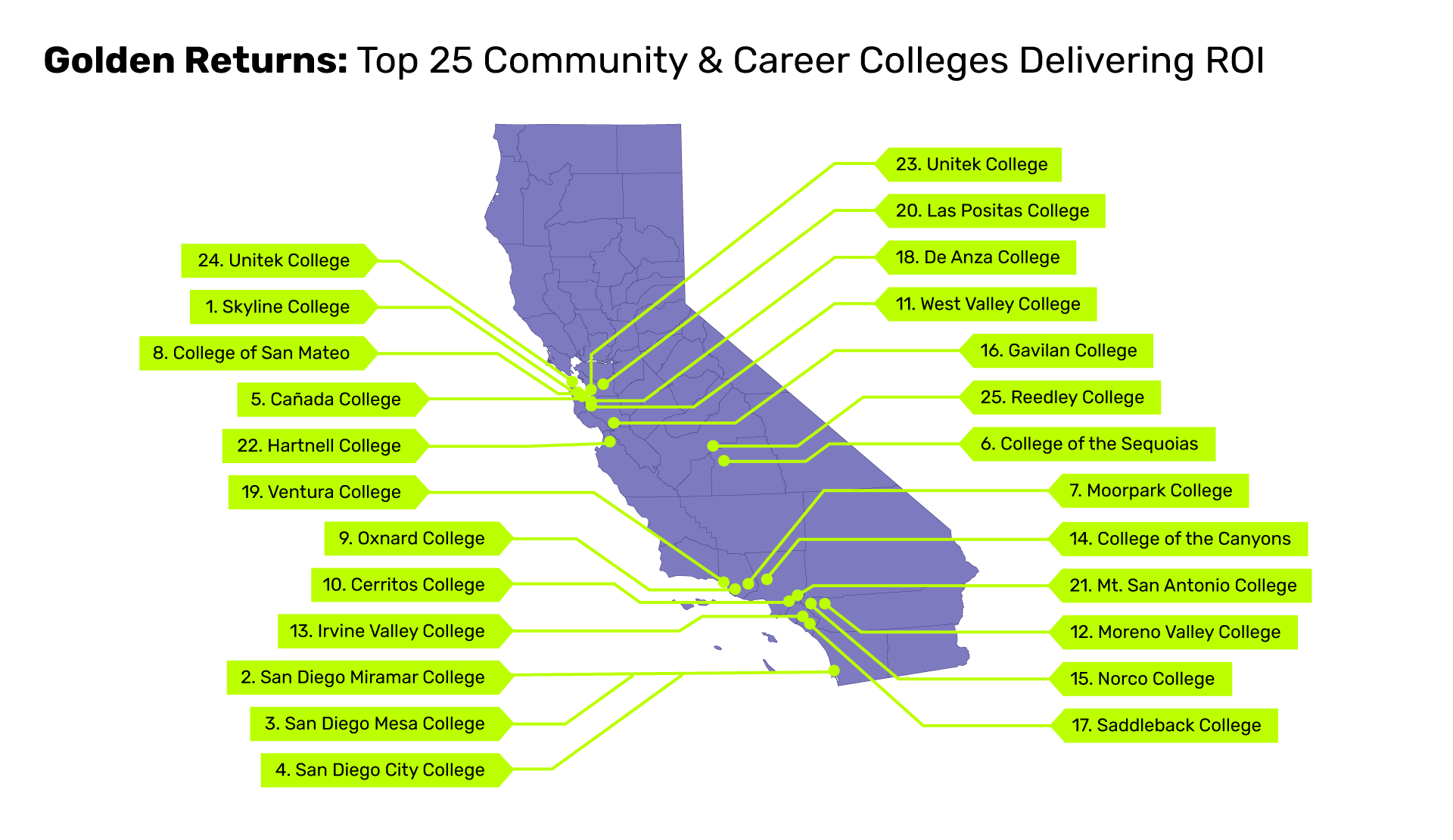
A first-of-its kind regional analysis of California’s community and certificate-granting colleges shows that while some institutions offer a rapid economic return to students, far too many provide little to no ROI, especially in underserved regions of the state.
A new op-ed by Michael Itzkowitz argues that clamping down on good, publicly available higher education data will send our university system and its students down a dark spiral.

To truly ensure students’ education pays off long-term, colleges need support to turn program-level data insights into concrete improvements. A new blog post by the HEA Group’s Laura Jimenez and Michael Itzkowitz.

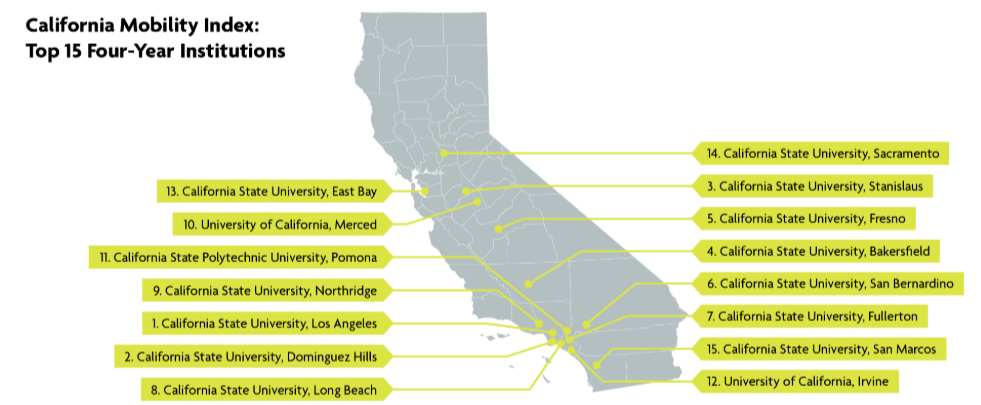
College Futures Foundation and the HEA Group prioritize economic mobility as a cornerstone of their missions and recognize that postsecondary education provides a critical pathway to a better life for underserved learners across California. The inaugural California Mobility Index (CMI) includes 82 four-year institutions that together enroll 785,576 undergraduate students. It describes the extent to which institutions drive upward mobility among underserved learners.
In this webinar, HEA Group President Michael Itzkowitz joins James Cryan of Willow Education to discuss strategies on how to assess—and improve—ROI at institutions and college programs across the United States. They provide an overview of the kind of returns that students can expect after enrollment and upon completion of their program.
Can higher education be the key to economic mobility for low and moderate-income learners in California? Michael Itzkowitz from the HEA Group joins Eloy Oakley to delve into this pressing question. Uncover the surprising findings of his latest report with the College Futures Foundation, "California Programs that Pay: Measuring Return on Investment Across Majors and Credentials."

In this report, we take a closer look at individual college programs and the time it takes graduates to recoup their educational costs after earning their credential within specific fields of study. The report provides policymakers, college administrators, researchers, and advocates with additional data on how well individual college programs serve learners from an economic perspective.
As part of the Carnegie Foundation for the Advancement of Teaching’s efforts, the HEA Group was commissioned to provide three primers on college access, college affordability and economic outcomes. These papers were intended to inform the Carnegie Postsecondary Commission’s work to produce transformational change within the US higher education system as we know it.
Get behind the data and value of higher education as Michael Itzkowitz engages in a focused conversation with Eloy Oakley of College Futures Foundation. Together, they dissect the HEA Group’s work on the commissioned "Golden Opportunities" report, delving into the intricacies of California's higher education investments and what they mean for students from low-to-moderate-income economic backgrounds.
In this paper, Michael Itzkowitz explores the challenges and opportunities presented by analyzing data collected at different levels of analysis within the same project. Given that federal data collection programs define and report data at different levels of analysis, this is a considerable analytical problem. He advances simple and effective techniques for harmonizing different types of variables collected at different levels of analysis.

In this analysis, we explore whether California colleges are delivering on their promise for people from low- and moderate-income backgrounds. Specifically, we examine how long it takes students and families in this income category to recoup their educational costs after attending an institution of higher education.

In this paper, we examine the economic outcomes that students obtain by pursuing a postsecondary credential within the United States. Specifically, we look at several minimal economic benchmarks to see just how many colleges exceed — or fail to meet — basic financial outcomes for the students who attend.

In the newest issue brief between NASFAA and the HEA Group, we explore the extent to which college completion impacts student loan repayment. The result? Those who did not complete college now owe $918 million more than they borrowed in the first place.

In this report, the HEA Group and Student Defense analyzes the five most popular master’s and doctoral programs awarded in the United States and examines whether there are differences in how much students earn—and how much they owe—based on their specific course of study.
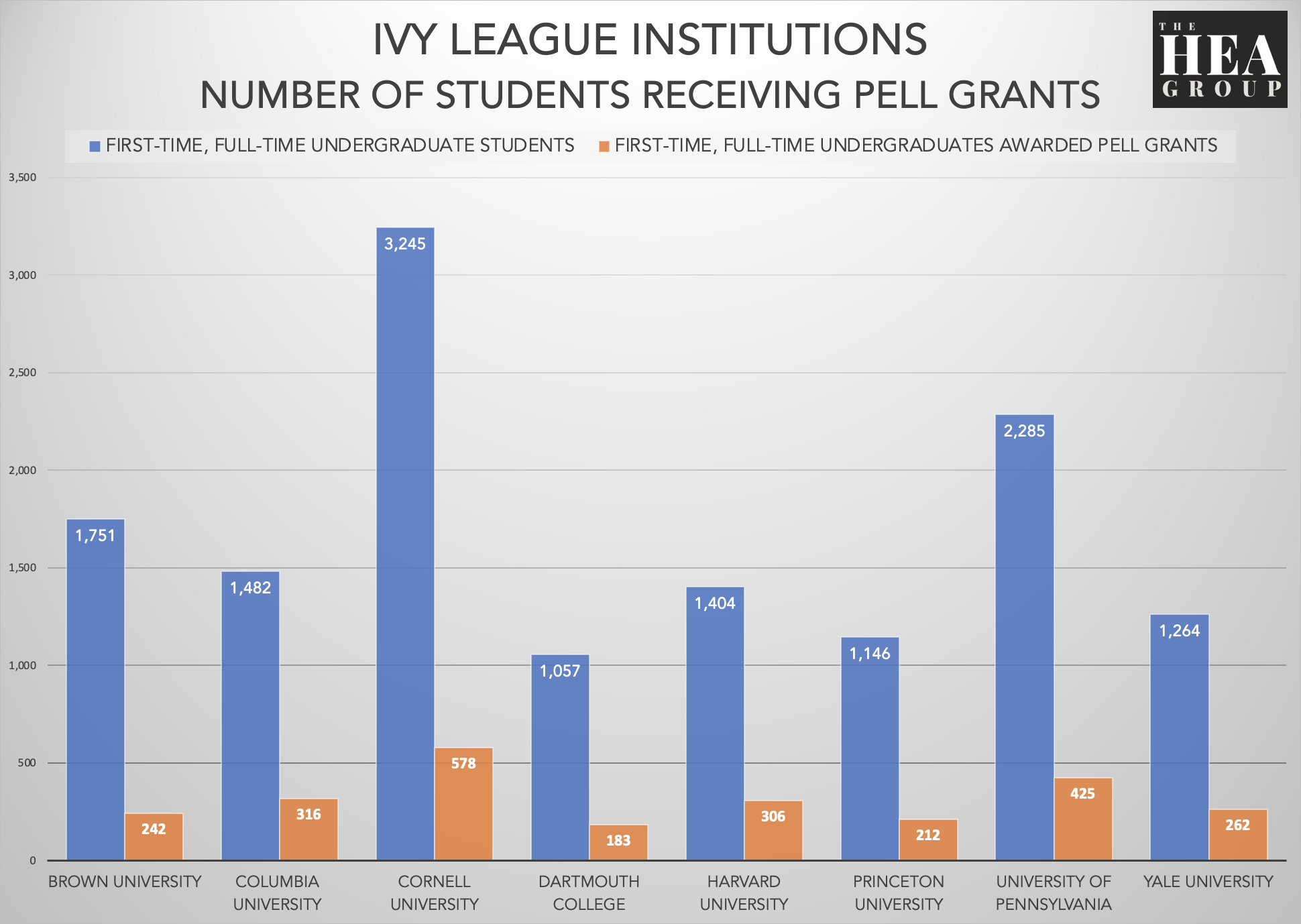
In this analysis, we explore efforts that Ivy League institutions can take to increase opportunities for students, especially those from lower- and moderate-income backgrounds. Specifically, we examine what a modest 5% increase of these students would look like at these schools. Even such small growth could pay big dividends for the low- and moderate-income students who get to attend.