New Earnings Test Data: Only 2% of College Degree Programs at Risk
Education Department Releases Latest Accountability Data
By Michael Itzkowitz
January 5, 2026
On December 30, 2025, the Education Department released new data determining which college degree programs may remain eligible to participate in the federal student loan program. Under the proposed rule, undergraduate programs must demonstrate that the majority of students who obtain a credential earn more than a typical high school graduate with no college experience. The Department has proposed applying this standard to all undergraduate programs, regardless of institutional sector, and negotiations take place from January 5-9, 2026.
Key Findings
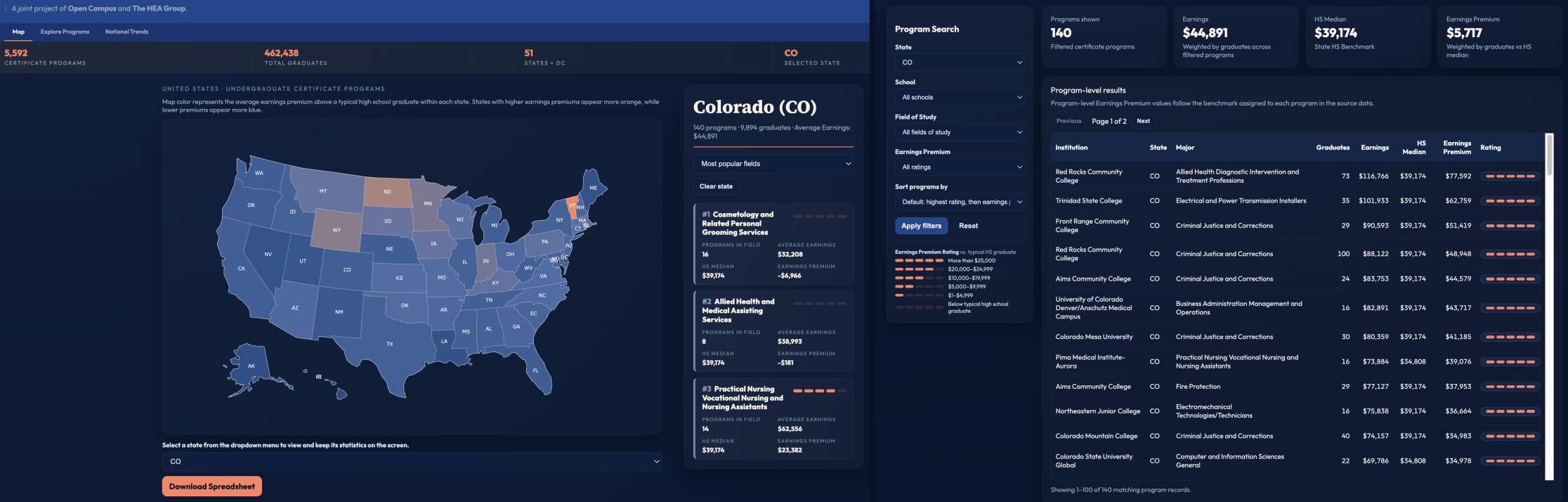
Only 804 out of 32,578 associate and bachelor-degree granting programs (~2%) are at risk of failing this test. These programs graduate 40,693 students out of 2,537,760 total students in the dataset. Comparatively, 1,659 out of 5,723 undergraduate certificate programs (29%) fail to meet this benchmark, meaning the majority of their completing students fail to earn more than someone with no college experience, even four year after attending.
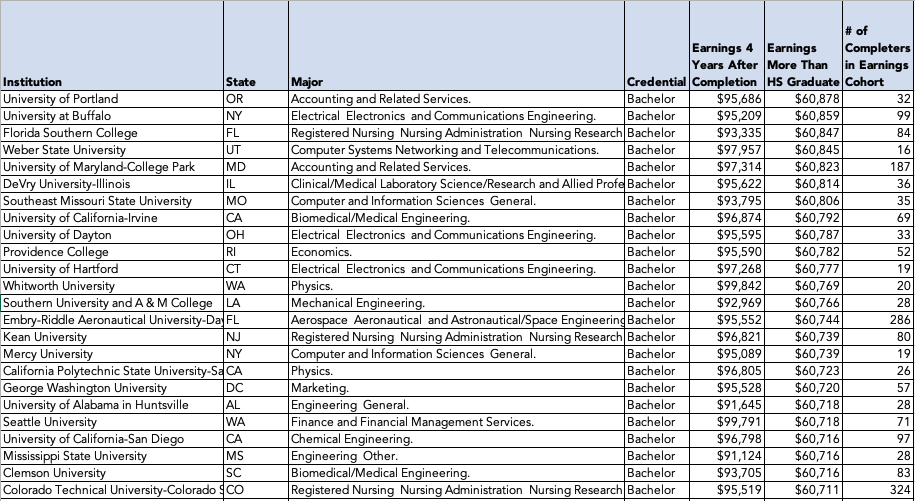
By contrast, 4,411 associate and bachelor degree programs programs (~14%) perform exceptionally well, with graduates earning at least $50,000 more than typical high school graduates within four years of completing their credential—representing 435,722 students. Nearly 140 undergraduate certificate programs also show their graduates earning this strong premium.
Access the Complete Dataset
The HEA Group has analyzed 32,578 undergraduate programs in the dataset. Our comprehensive analysis includes:
Graduate earnings by program
High school earnings benchmarks
Each program's risk status for federal aid eligibility
Data presented in an accessible, user-friendly format
What’s Next?
The HEA Group will continue monitoring these developments and tracking issues affecting higher education institutions nationwide.
For questions about this data or analysis, please contact us.
*This has been updated to reflect that 4,411 associate and bachelor degree programs show their graduates earning at least $50,000 more than the typical high school graduate.